
Stationary and stationery are two commonly confused words because they sound exactly the same but have different meanings and spellings. Stationary is an adjective that means not moving or staying in one place, while stationery is a noun that refers to writing materials such as paper, envelopes, pens, and notebooks. For example, The car remained stationary at the traffic light describes something that is not moving, whereas I bought some stationery for school refers to writing supplies.
Although these words differ by only one letter, using the wrong one can change the meaning of a sentence completely. A useful way to remember the difference is that stationery contains an e, just like envelope, while stationary contains an a, like at rest. This simple spelling trick can help you avoid confusing them.
Understanding when to use stationary and stationery will make your writing clearer and help you avoid a common English spelling mistake. Let’s explore their meanings, differences, and examples to see how each word is used correctly.
What Does ‘Stationary’ Mean?
Stationary is a adjective. It means not moving; staying in one place.
- The car remained stationary at the traffic light.
- A stationary bike lets you exercise indoors.
- The train was stationary when we boarded.
- Please keep the ladder stationary while I climb.
What Does ‘Stationery’ Mean?
Stationery is a noun. It means writing materials such as paper, pens, pencils, envelopes, and notebooks.
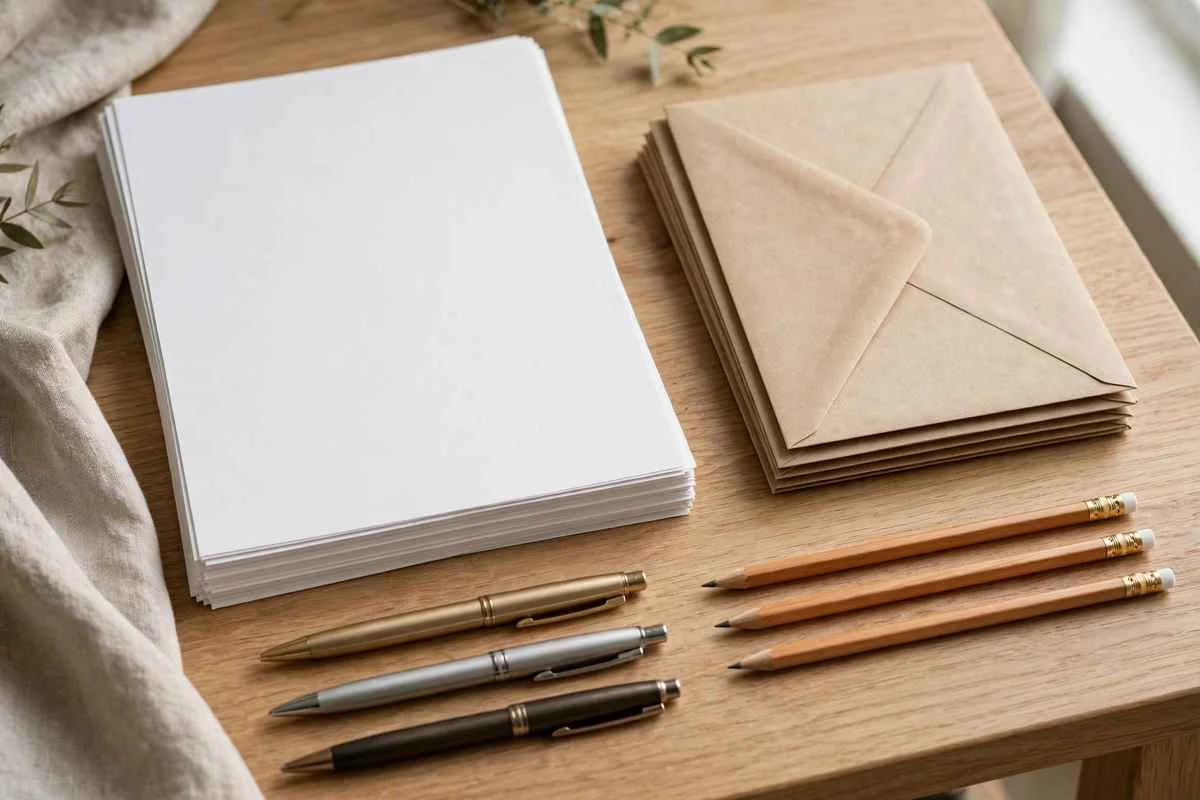
- She bought new stationery for the school year.
- The shop sells cards and stationery.
- His desk drawer is full of stationery.
- We ordered printed stationery for the office.
The Memory Trick
Stationery with an E is for Envelopes — both start with E, and envelopes are stationery. Stationary with an A is for “standing still” — think of the A as a person standing with legs apart, not moving. E = envelopes, A = at a standstill.
Comparison Table
| Stationary | Stationery | |
|---|---|---|
| Spelling vowel | A | E |
| Meaning | Not moving | Writing materials |
| Part of speech | Adjective | Noun |
| Memory clue | A = at a standstill | E = envelope |
| Example | A stationary car. | A stationery shop. |
Common Mistakes
- ❌ The bus stayed stationery at the stop. → ✅ The bus stayed stationary at the stop.
- ❌ I bought new stationary for school. → ✅ I bought new stationery for school.
- ❌ The bike is stationery, not moving. → ✅ The bike is stationary, not moving.
- ❌ The shop sells pens and stationary. → ✅ The shop sells pens and stationery.
Quick Quiz
Fill in the blank with the correct word. Answers are marked below each question.
The train remained ___ for ten minutes. (stationary / stationery)
Answer: stationaryShe loves buying pretty ___. (stationary / stationery)
Answer: stationeryA ___ car uses no fuel. (stationary / stationery)
Answer: stationaryPens, paper, and envelopes are all ___. (stationary / stationery)
Answer: stationeryPlease keep the camera ___ while filming. (stationary / stationery)
Answer: stationary
FAQ
How do I remember which spelling is which?
Stationery with an E is for envelopes. Stationary with an A means at a standstill. One letter makes all the difference.

Is stationery countable?
It is usually uncountable: “some stationery,” not “a stationery.” You count the items instead: “three pens.”
Can stationary describe a person?
Yes: “He stood stationary, watching the scene.” It means the person is not moving.
Are they pronounced the same?
Yes, both sound like STAY-shun-air-ee, so spelling is the only way to tell them apart in writing.
What counts as stationery?
Paper, notebooks, pens, pencils, envelopes, folders, and greeting cards — anything used for writing or office work.
Conclusion
One vowel changes everything: stationary with an A stays still, and stationery with an E fills your desk drawer. Remember envelopes, and you will never swap them again.
For the full dictionary definition, see stationery on Merriam-Webster, and keep practising one pair at a time.

Lydia Collins is an English language writer who explains confusing words, spelling differences, and everyday grammar in clear, simple language for learners.