
Intro
Confused about break vs brake? This guide explains the difference, with clear examples, a memory trick, and a quiz to test yourself. “Break” and “brake” sound the same, and both can even be verbs — which is why they get swapped so often. But they mean very different things: “break” is about snapping, splitting, or pausing, while “brake” is the device (or action) that slows or stops a vehicle. Mixing them up in driving contexts can even change the meaning dangerously, so it is worth getting right.
What Does “Break” Mean?
Break is a verb and a noun. As a verb, it means to split, crack, or smash something into pieces, to interrupt, or to stop following a rule. As a noun, it means a pause, a crack, or a gap.
Examples:

- Be careful not to break the glass.
- Let’s take a short break before we continue.
- She broke her arm while skiing.
- The news broke this morning.
What Does “Brake” Mean?
Brake is a noun and a verb. As a noun, it is the device that slows or stops a vehicle. As a verb, it means to slow down or stop using that device.
Examples:
- Press the brake gently to slow down.
- The car’s brakes need replacing.
- He braked suddenly when the dog ran into the road.
- Always check your brakes before a long journey.
The Memory Trick
Brake is the one with the extra “e” tucked in the middle — and it is the one you need for your car: think brake = car, because cars have brakes and you hit the brake to stop. Break is the everyday word for snapping and pausing — if no vehicle is involved, it is almost always “break.”
Break vs Brake — Side by Side
| Break | Brake | |
|---|---|---|
| Part of speech | Verb / noun | Noun / verb |
| Meaning | To snap, crack, pause, or interrupt | A stopping device; to slow or stop a vehicle |
| Example | “Take a break.” | “Press the brake.” |
Common Mistakes
❌ “Press the break to stop the car.” → ✅ brake
❌ “I need to brake this chocolate bar in half.” → ✅ break
❌ “The breaks on my bike are worn out.” → ✅ brakes
❌ “Let’s take a ten-minute brake.” → ✅ break
Quick Quiz
-
Don’t _______ that vase — it was a gift.
Answer: break -
Step on the _______ if the light turns red.
Answer: brake -
We will take a coffee _______ at eleven.
Answer: break -
The driver _______ hard to avoid the cyclist.
Answer: braked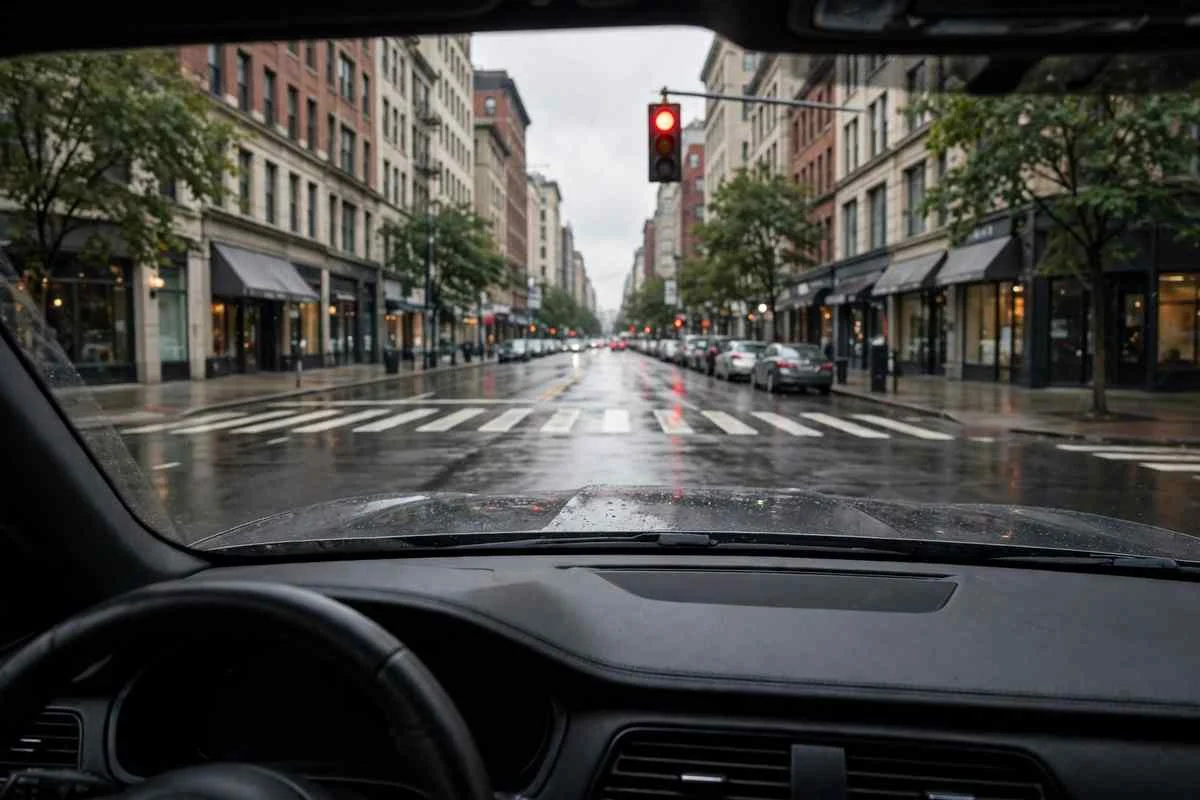
-
If you _______ the rules, there will be consequences.
Answer: break
FAQ
Is “brake” ever used outside driving?
Rarely, but yes — figuratively, “to put the brakes on something” means to slow it down or stop it, as in “The government put the brakes on spending.”
What is the past tense of “break”?
“Broke” (past) and “broken” (past participle): “She broke the plate” / “The plate is broken.”
What is the past tense of “brake”?
“Braked”: “He braked suddenly.”
Is “break” related to “breakfast”?
Yes! “Breakfast” literally means to “break the fast” — the first meal that ends the overnight fast.
Why is this pair so often confused?
Because they are homophones and both are common verbs. The context — vehicles versus snapping/pausing — is the reliable clue.
Conclusion
In short: break means to snap, crack, pause, or interrupt, while brake is the device that stops a vehicle (or the act of using it). Remember: brake = car, break = everything else. Keep the momentum going with personal vs personnel, pore vs pour, and baited vs bated. Precision like this keeps your English safe — and on the road, it matters even more.

Grace Holden writes about English vocabulary and common word differences, helping learners understand tricky words with simple, practical explanations.
Pingback: Rein vs Reign vs Rain: What's the Difference? (With Examples + Quiz)
Pingback: Capital vs Capitol: What's the Difference? (With Examples + Quiz)