
A device is a noun. It names a tool, gadget, or machine made for a job, such as a phone, a hearing aid, or a safety device. To devise is a verb. It means to invent, plan, or think up something, often something clever. The ending gives the answer away. Device ends with c, like the word contraption, and names a thing. Devise ends with s, like the word scheme, and names an action. Things take device. Actions take devise.
Why Device and Devise Look So Alike
The device vs devise pair confuses writers because the two words share a root, a sound, and almost every letter. Only the final letter differs, c in one and s in the other, and the two words are close in meaning too. A device is often the result of devising. Someone devises a plan, and the plan may produce a device. That closeness makes the swap easy to miss when you proofread your own work.
This pattern is not unique to this pair. English keeps several noun and verb partners apart with the same c and s split, and advice vs advise is the most famous example. Once you learn that the c word is the noun and the s word is the verb, a whole family of spelling problems gets easier at once.

In this guide you will see clear definitions, a table that puts the words side by side, and plenty of sentences from school, work, and home. You will also learn the small pronunciation difference that careful speakers make, plus the meaning of the phrase left to your own devices, which surprises many readers.
| Term | Meaning | Best Use | Example |
|---|---|---|---|
| Device | A tool, gadget, or technique | Phones, tools, safety gear, writing | She charged her device overnight. |
| Devise | To invent or plan something | Plans, systems, methods, solutions | They devised a plan to save time. |
What Device Means
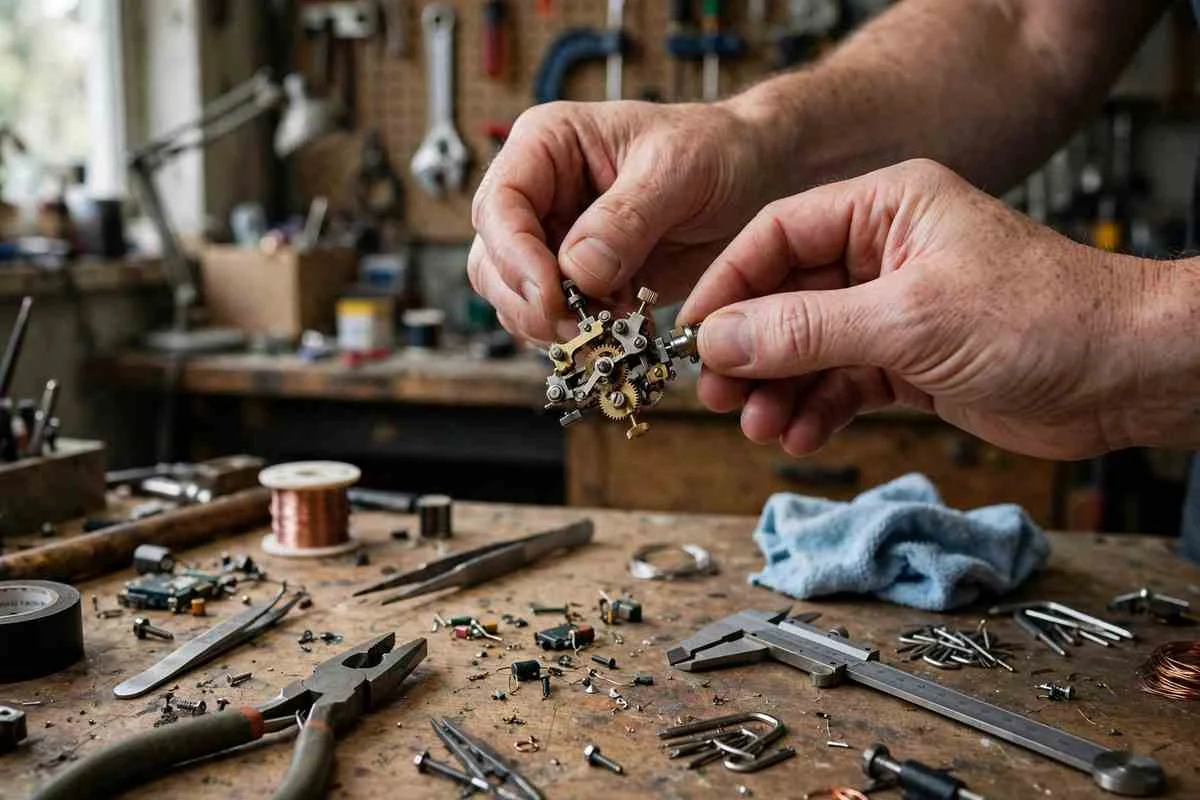
Device is a noun, and its core meaning is something made or used for a purpose. The most common modern sense is an electronic tool. Phones, tablets, laptops, and smart watches are all devices, and schools and offices use the word this way every day. A medical device helps doctors treat patients. A safety device protects workers from harm.
The word reaches beyond electronics. In writing and film, a device is a technique used to create an effect. A flashback is a storytelling device. A cliffhanger is a device that keeps readers turning pages. In this sense, a device is a tool of the craft rather than a piece of hardware, but it still names a thing, not an action.
Notice how device behaves in a sentence. It can follow words like a, the, this, and my. It can be plural, as in devices. Nouns fit those spots, and device is always a noun. If your sentence needs a word that names an object or a technique, device is the spelling you want.
What Devise Means
Devise is a verb, and it means to create something in your mind. When you devise, you invent a plan, design a method, or think up a solution to a problem. Teachers devise lessons. Engineers devise systems. A coach devises a play for the big game. The word suggests thought and care, and it often appears where the plan is clever or complex.
Devise changes form like other verbs. It becomes devised in the past tense and devising in the present participle. You might read that a committee devised new rules, or that a student is devising a way to remember dates. If the word in your sentence shows action and can take forms like these, the spelling is devise with an s.
The dictionary entry for devise also lists an older legal sense, where devise means to leave property to someone in a will. That sense lives mostly in law offices and old documents, so daily writers rarely need it. The everyday meaning to hold is the planning one: to devise is to think something up.
Device vs Devise in Everyday Sentences
Grouped examples show the grammar at work. In each device sentence, the word names a thing you could point to or describe. In each devise sentence, the word reports an act of planning.
Sentences with Device
Each sentence below uses device as a noun naming a tool or technique.
- The tablet is the device she uses for reading.
- A smoke alarm is a simple safety device.
- He bought a device that tracks his sleep.
- The dentist used a small device to clean her teeth.
- Phones and laptops are not allowed; leave every device in your locker.
- The author used letters as a device to tell the story.
- This kitchen device opens jars with ease.
Sentences with Devise
Each sentence below uses devise as a verb about planning or inventing.
- Our team devised a plan to finish early.
- She devised a smart way to organize the files.
- The city devised a system to save water.
- Can you devise a test that is fair for everyone?
- They are devising a new route for the school bus.
- He devised a code that only his friends could read.
- The chef devised a menu around local vegetables.
A Memory Trick That Settles It
Two short pictures make this pair easy. Device ends in c, and c stands for contraption, a thing with parts that you can hold or point to. Devise ends in s, and s stands for scheme, a plan that exists in your head before it exists in the world. When you write, ask one question: is this a thing or an action? Thing means device. Action means devise.
The sound can help too. Device ends with a soft s sound, dih VYSE. Devise ends with a z sound, dih VYZE. Many speakers blur the two sounds in fast speech, so do not rely on sound alone. Rely on the job of the word in the sentence, and the spelling will follow.
The advice and advise pair works the same way, so the trick travels. Nouns take c. Verbs take s. Learn this pair well and you gain a rule that covers more than one spelling problem.
Common Mistakes to Avoid
Most errors come from treating the two words as free variants of each other. They are not. Read the pairs below and name the job of the word in each sentence before you look at the correction.
Wrong: The teacher used a clever devise to explain fractions.
Right: The teacher used a clever device to explain fractions.
Wrong: Engineers device a system to clean the river.
Right: Engineers devise a system to clean the river.
Wrong: Please device a password you can remember.
Right: Please devise a password you can remember.
Wrong: She devised a new phone for the company. (When you mean she built or designed the product itself, name the product with device.)
Right: She designed a new device for the company.
Wrong: Put your devise on silent during the movie.
Right: Put your device on silent during the movie.
A useful proofread is to swap in a clear test word. If the sentence still works with gadget, you need device. If it works with plan or invent as a verb, you need devise. That two second test catches nearly every slip.
Quick Quiz
Choose device or devise for each blank, then compare your answers with the key.
- The hearing aid is a tiny electronic ______.
- They need to ______ a better way to sort the mail.
- She ______d a plan to finish the project early.
- No mobile ______s are allowed in the testing room.
- The writer used a dream as a literary ______.
Answer key: 1. device 2. devise 3. devise 4. device 5. device
Frequently Asked Questions
Are device and devise pronounced the same?
Almost, but careful speakers make a small difference. Device ends with an unvoiced s sound, while devise ends with a voiced z sound. Because the sounds are so close, spelling has to rest on grammar. Ask whether the word names a thing or an action.
Can device ever be a verb?
No. In standard English, device is only a noun. When you need a verb that means to plan or invent, the word is devise. Sentences like please device a plan are always errors, however natural they may feel while typing.
What does left to your own devices mean?
This phrase means left alone to do what you want, without help or supervision. Here devices means your own ideas and resources. Parents might leave teens to their own devices for an afternoon, trusting them to manage on their own.
What is a literary device?
A literary device is a technique a writer uses on purpose, such as a metaphor, a flashback, or irony. The word device fits because the technique works like a tool. Writers choose devices to shape how readers feel and what they notice.
Is devise a formal word?
Devise sounds slightly formal, and it suits reports, essays, and news writing very well. In casual talk, people often say come up with or think up instead. All three choices are correct; devise simply carries a more polished tone.
How is device vs devise like advice vs advise?
Both pairs follow the same pattern. The word with c is the noun, and the word with s is the verb. Advice is a noun and advise is a verb, just as device is a noun and devise is a verb. One rule handles both pairs.
Conclusion
The device vs devise rule takes one second to apply. If the word names a thing, like a gadget, a tool, or a storytelling technique, write device with a c. If the word names the act of planning or inventing, write devise with an s. Contraption for the thing, scheme for the plan, and the pair is settled.

Grace Holden writes about English vocabulary and common word differences, helping learners understand tricky words with simple, practical explanations.
Pingback: Moral vs Morale: Meaning, Differences, and Examples